I am a PhD student at the Chair of Infrastructure Management at ETH Zürich, led by Prof. Bryan T. Adey, where I work on the Horizon Europe project SAFE-MOVE. My research uses computer vision and remote sensing for road safety: I combine vehicle sensor data with imagery to find the built-environment features and near-misses that put cyclists, pedestrians and micromobility users at risk.
I hold an MSc in Civil Engineering from ETH Zürich. For my thesis, supervised by Prof. Catherine De Wolf at the Chair of Circular Engineering for Architecture, I trained a computer vision model on drone imagery to map rooftop materials across more than 1,200 buildings in Geneva. My work spans end-to-end deep learning pipelines, from data acquisition and annotation to training and deployment, as well as aerial photogrammetry, point cloud processing and fusing imagery with geospatial data.
Before my PhD, I worked in industry on BIM-based project delivery and building-technology innovation. Earlier, I studied civil engineering at Amirkabir University of Technology.
Publications
Evaluation of the application of municipal solid waste incinerator (MSWI) ash in civil engineering using a sustainability approach
Selected Projects
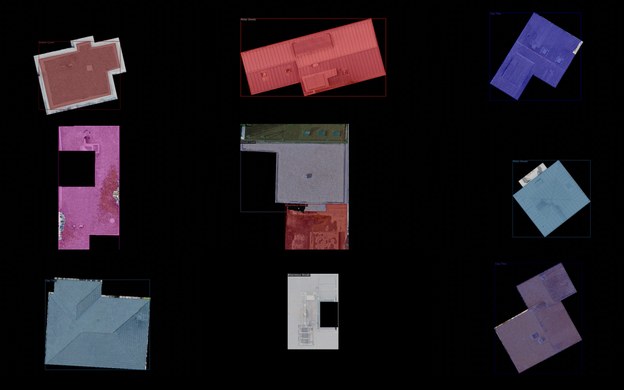
Urban-Scale Rooftop Material Detection with Computer Vision
End-to-end pipeline on UAV aerial photogrammetry imagery training a Mask R-CNN instance segmentation model (PyTorch, Detectron2) to classify and quantify rooftop materials across 1,200+ buildings in Geneva, producing a georeferenced material cadastre to support circular construction.
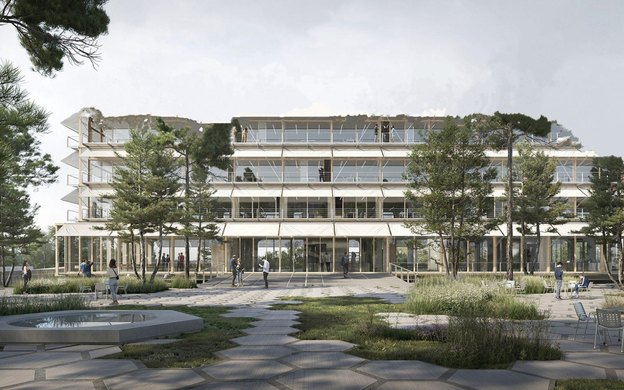
Custom BIM Viewer for Material Passports
A web BIM viewer on Autodesk Platform Services that puts a building's material passport onto its 3D model. Built for Flexilibres, a circular, low-carbon timber redesign of the Equilibres building, it colors every element by passport metrics such as embodied CO2, lifespan and reuse potential, summarizes them by building layer or material, and lets you filter the model and inspect each element's passport.
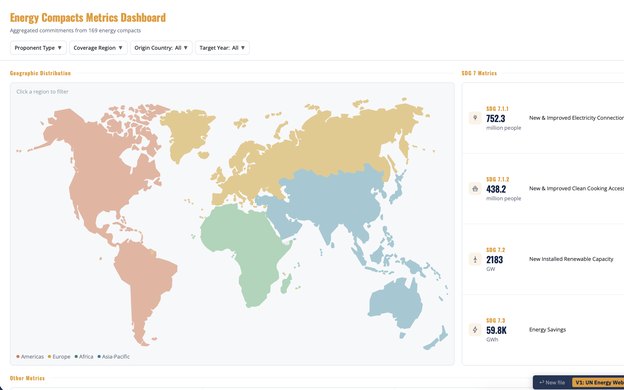
Energy Compacts Visualization Tools
Two browser-based tools for exploring the UN Energy Compacts. A force-directed network graph (D3.js) of 169 compacts, 1,204 actors and 2,067 relationships shows who works with whom, and an interactive dashboard turns compact data from Excel or CSV into SDG 7 metrics, a filterable world map and target-year views. Both run entirely in the browser, so no data leaves the user's machine, and export as standalone web pages.
Education
- PhD Student ETH Zürich, Chair of Infrastructure Management (Prof. Bryan T. Adey) Computer vision and remote sensing for the road safety of cyclists, pedestrians and micromobility users, within the Horizon Europe project SAFE-MOVE.
- MSc Civil Engineering ETH Zürich Specializations in Transport Systems (IVT) and Construction and Infrastructure Management (IBI). GPA 5.5 / 6.0.
- BSc Civil Engineering Amirkabir University of Technology (Tehran Polytechnic), Iran
Professional Experience
- Digital Project Manager Sakht O Saz Tehran, Tehran Led BIM-based digital delivery for a large-scale industrial steel structure, with model-based clash detection, schedule coordination and progress monitoring across engineering, site management and external stakeholders.
- Innovation & Energy Consulting Intern Amstein + Walthert AG, Zürich Researched how AI and digital twins can enhance building-technology products and scouted CarbonTech and ClimateTech startups in the AEC industry. Supported 200+ cantonal building energy certificates (GEAK) for major real estate portfolios.
- Business Development Consultant Georg Fischer AG, Schaffhausen Developed digitalization and automation-oriented solutions for product and service development in the building technology sector.
- Junior Project Manager Sakht O Saz Tehran, Tehran Managed planning, scheduling and resource allocation for the construction of a large industrial steel structure.
Teaching
- Teaching Assistant ETH Zürich, Industrialized Construction Supported course delivery under Prof. Daniel Hall, training students in Industry 4.0 business model development and digital innovation for the AEC sector.
Selected Achievements
- Member, Startup Campus Switzerland (12-week acceleration program)
- Finalist, ETH Hatchery Design Thinking Program
- 🥈 Silver medal, 24th International Young Physicists' Tournament (IYPT)
- 🥇 Gold medal, 4th Persian Young Physicists' Tournament (PYPT)